

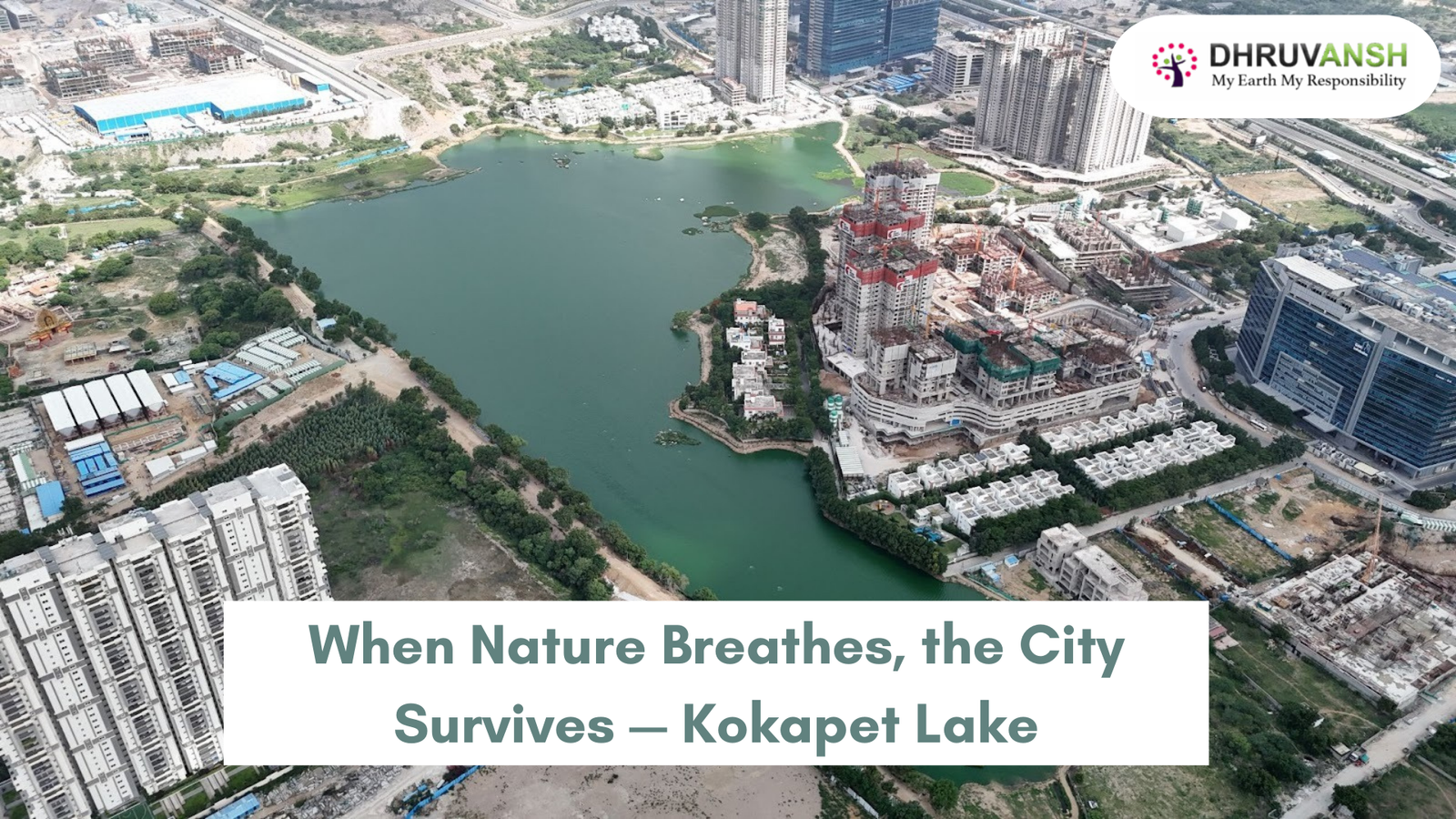

As Hyderabad continues to grow at an unprecedented pace, the city faces two increasing challenges: urban flooding and rising heat levels. Concrete surfaces are replacing open land, natural drainage paths are disappearing, and green spaces are shrinking. In this changing landscape, Kokapet Lake (also known as Kotha Cheruvu) stands as one of the city’s most important natural defenses.
More than just a waterbody, Kokapet Lake plays a critical role in controlling stormwater, cooling the surrounding environment, recharging groundwater, and supporting urban biodiversity. Protecting and restoring this lake is not just an environmental effort—it is essential for Hyderabad’s climate resilience and long-term sustainability.
Dhruvansh NGO is working to ensure that Kokapet Lake continues to function as a living, protective ecosystem rather than becoming another neglected urban waterbody.
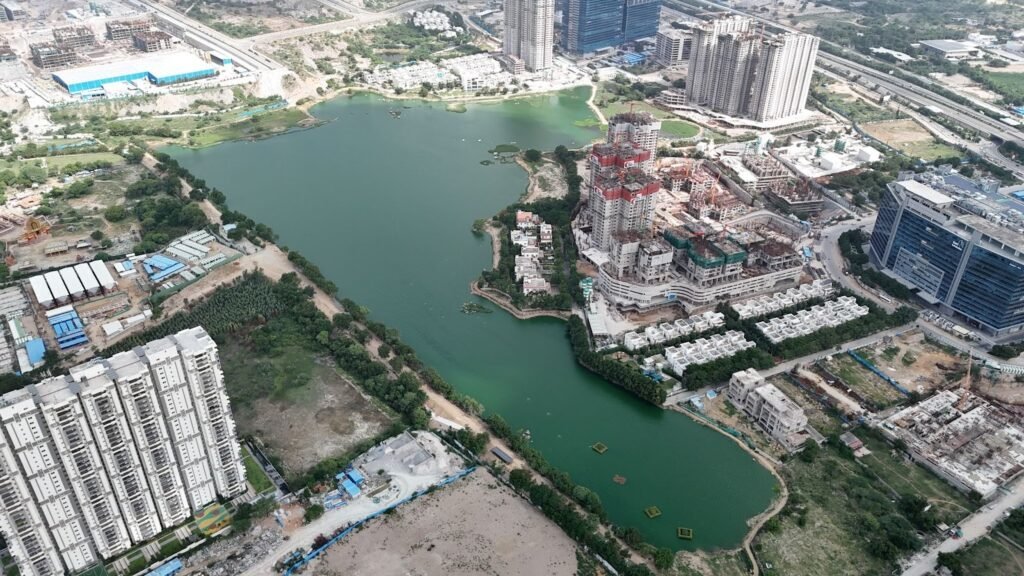
Why Urban Flooding and Heat Are Increasing in Hyderabad
Over the past few years, Hyderabad has witnessed frequent waterlogging during heavy rains and increasingly intense summer heat. This is not a coincidence. Rapid urbanisation has led to:
- Loss of natural lakes and wetlands
- Blocked or built-over stormwater channels
- Reduced open soil that absorbs rainwater
- Increased heat absorption by concrete and asphalt
When rain falls on a city without enough natural storage and drainage, it flows rapidly over hard surfaces, leading to urban flooding. At the same time, the loss of waterbodies and green cover causes temperatures to rise, creating urban heat islands.
This is where lakes like Kokapet become crucial.
Kokapet Lake’s Role in Flood Control
Kokapet Lake acts as a natural stormwater reservoir. During heavy rains, it collects and holds excess runoff from surrounding areas, slowing down water flow and reducing the risk of flooding in nearby neighbourhoods.
When a lake is healthy and properly connected to its natural inflow and outflow channels, it works like a buffer. Instead of water rushing through streets and homes, it is stored, released slowly, and absorbed into the ground.
If such lakes are lost or allowed to degrade, cities lose one of their most effective and cost-free flood control systems.
A Natural Cooler in a Warming City
Waterbodies play a powerful role in cooling urban environments. Through evaporation and air movement, lakes help reduce surrounding temperatures and soften the impact of extreme heat.
Kokapet Lake contributes to:
- Lower local temperatures
- Improved air circulation
- Reduced heat stress for nearby communities
- A healthier microclimate
As Hyderabad experiences longer and hotter summers, protecting lakes is no longer optional—it is a climate adaptation strategy.
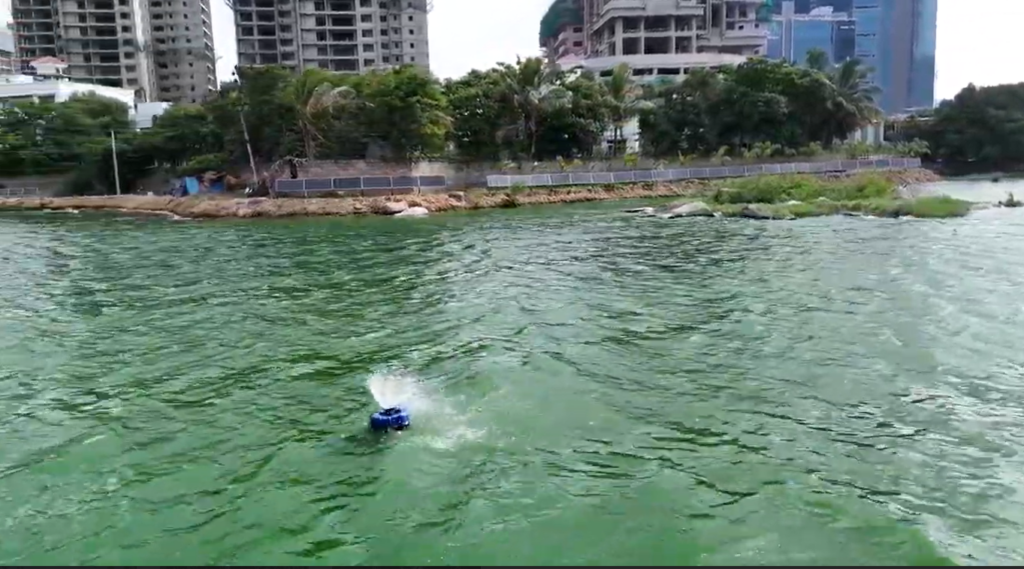
The Impact of Urbanisation on Kokapet Lake
Like many urban lakes, Kokapet has faced pressure from:
- Construction runoff and debris
- Waste dumping
- Sewage inflow
- Encroachment and boundary loss
- Reduced natural water circulation
These factors weaken the lake’s ability to perform its ecological functions. A polluted or silted lake cannot store water efficiently, cannot cool the environment effectively, and cannot support biodiversity.
Recognising this, Dhruvansh NGO has taken a long-term, science-based approach to restoring and protecting Kokapet Lake.
Dhruvansh NGO’s Approach to Building Climate-Resilient Lakes
Rather than focusing only on surface cleaning, Dhruvansh works on restoring the lake as a functional ecosystem.
The approach includes:
- Clearing waste and invasive vegetation
- Improving natural water flow and circulation
- Strengthening lake boundaries
- Desilting to improve water-holding capacity
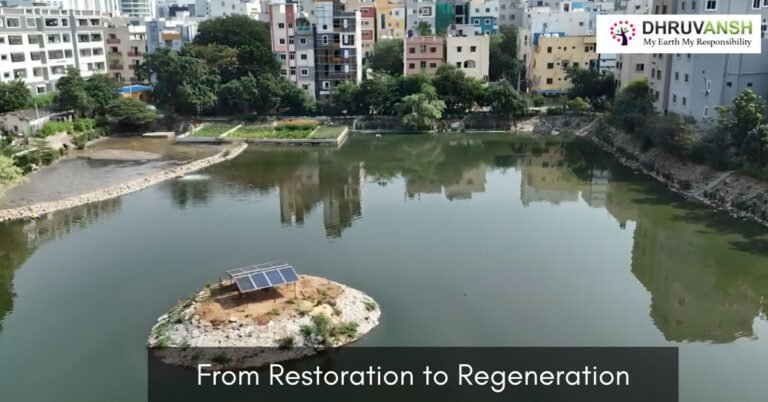
- Planting native vegetation along the shores
- Using nature-based methods to improve water quality
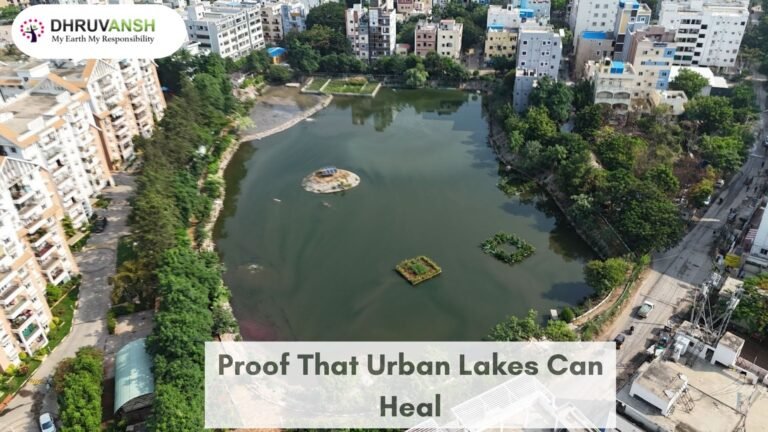
This ensures that Kokapet Lake can once again store rainwater, recharge groundwater, support life, and regulate local climate.
Benefits Beyond Water Management
A healthy Kokapet Lake offers multiple long-term benefits:
- Reduced flood risk during heavy rains
- Improved groundwater levels in surrounding areas
- Lower local temperatures during summer
- Better air quality and greener surroundings
- Habitat for birds, fish, and insects
- A natural public space for the community
In a rapidly growing urban area like Kokapet, such ecological infrastructure is far more valuable than concrete solutions alone.
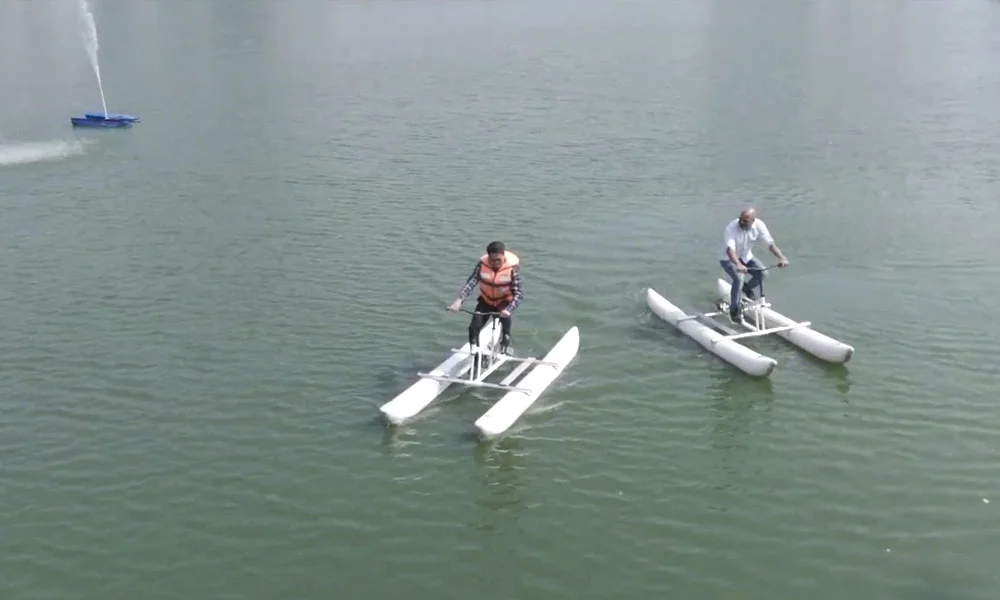
Community Participation: The Key to Long-Term Protection
Technology and planning can restore a lake—but only people can protect it forever.
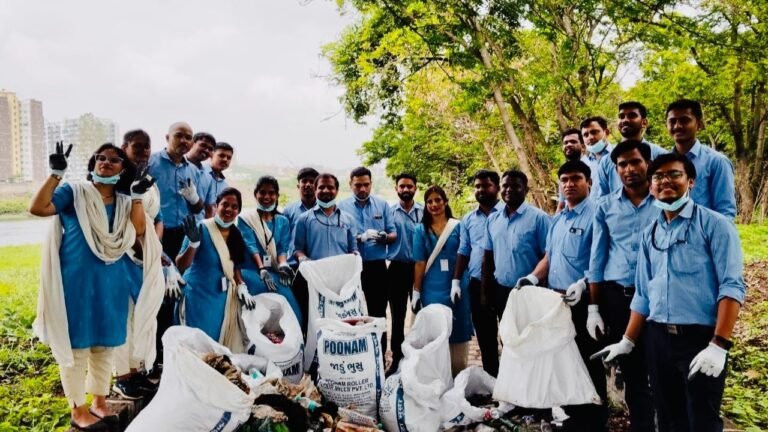
Local residents, volunteers, students, and corporate groups regularly participate in clean-up drives, plantation activities, and awareness programs around Kokapet Lake. This builds a strong sense of ownership and responsibility.
When people feel connected to a lake, they naturally prevent dumping, report damage, and support conservation efforts. This social protection is just as important as ecological restoration.
Kokapet Lake as a Model for Hyderabad’s Future
As climate challenges increase, cities must rely more on nature-based solutions. Kokapet Lake shows how urban waterbodies can function as:
- Flood control systems
- Climate regulators
- Biodiversity hubs
- Community spaces
Rather than seeing lakes as obstacles to development, Hyderabad must recognise them as essential infrastructure for survival and resilience.
Conclusion: Protecting a Natural Shield
Kokapet Lake is not just a lake—it is Hyderabad’s green shield against floods and heat. Its protection is directly linked to the city’s safety, comfort, and environmental health.
Through Dhruvansh NGO’s continuous efforts and community support, Kokapet Lake is moving toward a future where it can once again perform its full ecological role .In a warming and rapidly urbanizing world, protecting lakes is not about saving nature—it is about saving ourselves.