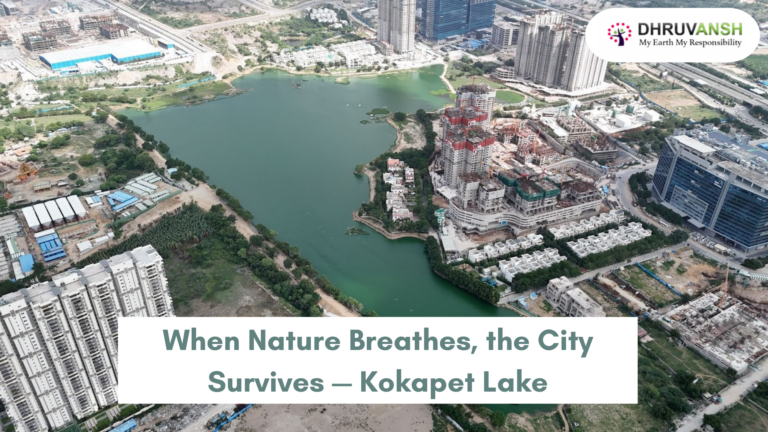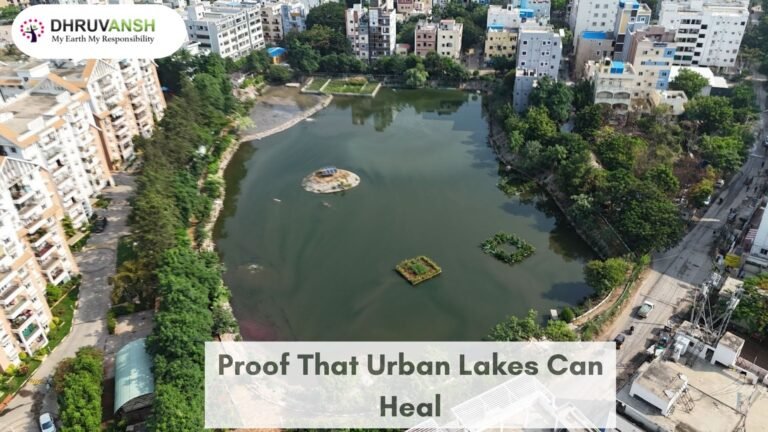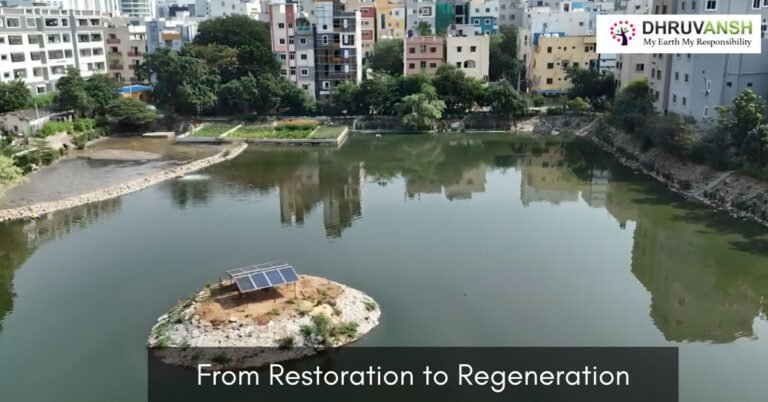


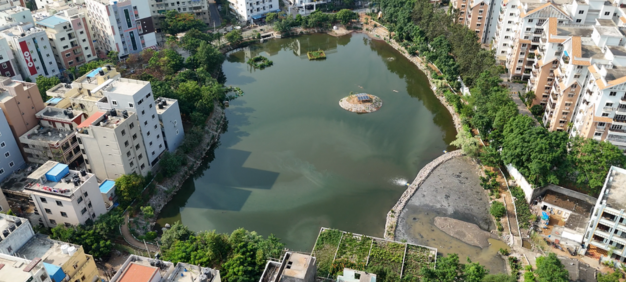

Barla Kunta Lake, located in Indiranagar, Gachibowli (Hyderabad), is undergoing a remarkable transformation from a neglected urban water body to a model ecological site. This restoration is being led by Dhruvansh NGO, an organization renowned for its nature-based, chemical-free water conservation initiatives. Their efforts are not just about reviving a lake; they are about enhancing the environmental stability and human well-being in one of Hyderabad’s most rapidly urbanizing zones.
📍 Significance of Barla Kunta Lake in Gachibowli’s Urban Landscape
As Gachibowli develops into a major IT and residential hub, green and blue ecosystems are increasingly under pressure. Barla Kunta is one of the few remaining urban lakes that serves multiple ecological and social functions, including:
1. Groundwater Recharge
Barla Kunta naturally collects rainwater and surface runoff, allowing water to seep into underground aquifers. This contributes to the groundwater table, which is essential for households, borewells, and nearby commercial zones.
2. Urban Flood Mitigation
During heavy rainfall, the lake acts as a natural stormwater reservoir, reducing the burden on urban drainage and minimizing flood risk in surrounding low-lying areas.
3. Temperature and Air Regulation
Open water bodies like Barla Kunta help regulate local microclimates. The lake absorbs heat during the day and releases it slowly, reducing the urban heat island effect and enhancing air quality by supporting surrounding vegetation.
4. Biodiversity Preservation
Even small lakes like Barla Kunta serve as habitats for:
- Migratory and native bird species
- Aquatic plants and microorganisms
- Amphibians and small reptiles
This biodiversity contributes to the ecological health of urban Hyderabad.
5. Human Health and Well-being
The presence of green-blue spaces:
- Reduces mental stress
- Improves air quality
- Encourages outdoor physical activity
Barla Kunta, once restored, becomes a vital space for community interaction, learning, and recreation.
🛠️ Dhruvansh NGO: Leading the Restoration with Eco-Innovation
Dhruvansh is an environmental NGO focused on nature-based water conservation solutions. With past success stories like Neknampur Lake, they have now undertaken the challenge of restoring Barla Kunta using innovative, eco-friendly technologies.
🔬 Key Technologies & Approaches:
1. Integrated Floating Wetland Treatment Technology (IFWTT)
This is the core solution deployed by Dhruvansh at Barla Kunta. It consists of:
- Floating rafts built from recycled material
- Native wetland plants like vetiver, canna, and colocasia
- Root systems that act as natural biofilters, absorbing nitrates, phosphates, and heavy metals
Function: Mimics a natural wetland, cleans the water, and promotes aquatic life without the use of chemicals or machines.
2. Floating Garbage Broom
A manually operated cleaning device designed by Dhruvansh that:
- Skims floating plastic, debris, and algal blooms
- Reaches corners where traditional equipment cannot
- Is cost-effective and easy to maintain
3. Bio-Enzyme Drives
Dhruvansh organizes community-led drives to prepare and pour bio-enzymes (fermented citrus, jaggery, and water) into the lake. These:
- Break down organic waste
- Improve water clarity and smell
- Promote beneficial microbial activity
👥 Community Participation and Education
Dhruvansh integrates environmental education with action. At Barla Kunta, they:
- Conduct school and college workshops on wetland science
- Encourage residents and children to plant saplings and floating vegetation
- Facilitate volunteer clean-up events and biodiversity documentation
This approach not only supports physical restoration but builds a sense of local ownership and ecological responsibility.
📈 Visible Outcomes of the Barla Kunta Restoration
| Parameter | Before Restoration | After Dhruvansh Intervention |
| Water Quality (BOD, COD) | Poor (High pollution) | Improved (Lower pollutant load) |
| Biodiversity | Minimal | Return of birds and aquatic life |
| Flood Risk | High | Reduced through stormwater intake |
| Public Engagement | Low | High community involvement |
| Air & Temperature Regulation | Negligible | Improved microclimate |
🧩 Long-Term Vision
Dhruvansh envisions Barla Kunta as a self-sustaining ecological and educational hub for Gachibowli and Hyderabad. Plans include:
- Signage for biodiversity trails
- Water quality monitoring displays
- Outdoor classrooms for environmental science students
By turning the lake into a living laboratory, Dhruvansh is not only restoring nature but preparing future generations to protect it.